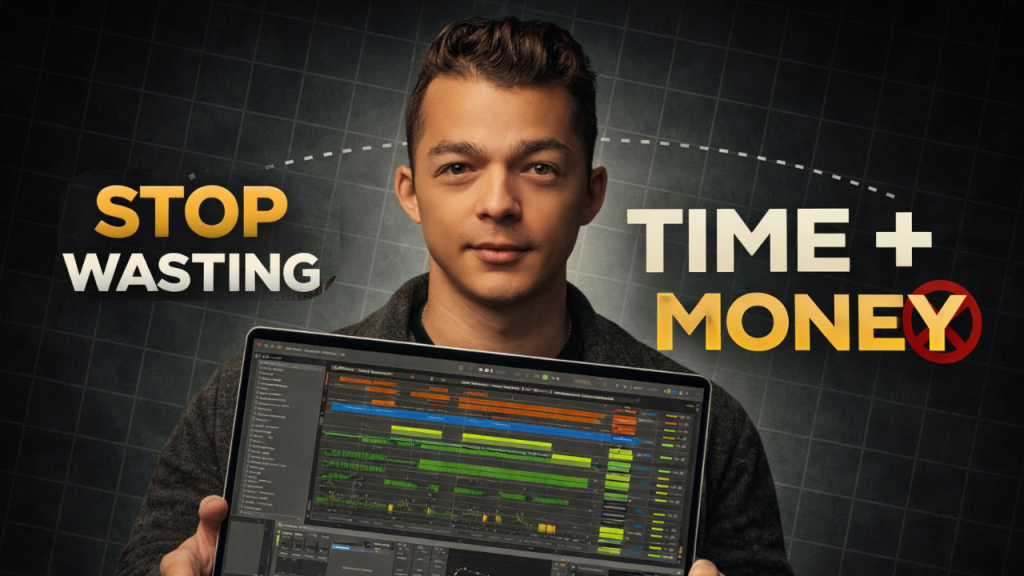
Picture this: you spend thousands of dollars on music education. You show up every week, take notes, and genuinely try to absorb everything your teachers throw at you. You learn a lot. You grow. And then, a year later, you realize you’re nowhere near the sound you actually wanted to make.
That’s not a hypothetical. That’s a real thing that happens to producers all the time, and it happened to me. I went to music school with one goal: to get better at making future bass. My teachers were talented, experienced, and genuinely invested in their students. They were also specialists in hip hop, techno, and UK garage. Not their fault. Not mine either. But the mismatch cost me time, money, and momentum I couldn’t get back.
Finding a good coach for electronic music production isn’t just about finding someone talented. It’s about finding the right person for where you’re trying to go. This post gives you a real framework for doing exactly that, so you don’t end up paying for expertise that doesn’t move you forward.
Does Your Coach Actually Make the Music You Want to Make?
This is the first thing to check, and most producers skip it entirely. They look at follower counts, production credits, or how polished someone’s website is. What they don’t do is actually listen to the coach’s music and ask one simple question: is this the sound I’m trying to build?
Why Genre Alignment Matters More Than You Think
Electronic music is not one genre. Future bass, melodic dubstep, house, techno, drum and bass. These are entirely different worlds technically and creatively. The sound design principles, the arrangement structures, the mixing philosophies are all distinct. A coach who specializes in deep house can teach you a lot about groove and minimalism, but they’re probably not the best guide if you’re trying to build those enormous, layered synth chords that define future bass.
This is the music school problem in a nutshell. The education was real. The skills I picked up were real. But none of it was targeted at the genre I was actually trying to master. When you’re investing in coaching, you deserve specificity, not just general knowledge.
What to Listen for in Their Discography
Don’t just ask “do I like this music?” That’s a good start, but it’s not specific enough. What you’re actually asking is whether this coach has achieved the milestones you want to hit. Do they have releases on labels you respect? Do they have meaningful streaming numbers? Have they played their music at festivals or shows that align with your goals?
These aren’t superficial status markers. They’re proof that the coach has navigated the actual path you want to walk, from making the music to releasing it to getting it heard by real audiences. If a coach can’t point to those kinds of achievements in your specific genre, they may still be a great teacher, but they’re not the right coach for where you’re specifically trying to go.
What Has Your Coach Actually Accomplished?
There’s a version of music coaching that’s incredibly common and almost completely useless. Someone with years of production experience sets up a coaching program and markets it with phrases like “I’ll teach you how to make beats” or “learn the secrets of music production.” It sounds appealing. It delivers almost nothing.
Credentials That Actually Matter
Ten years of experience producing music does not automatically make someone a great coach for your goals. What matters is whether their specific achievements map to your specific destination. A coach who has 500K monthly Spotify listeners in melodic dubstep, who has been signed to labels you know, who has performed at festivals in your scene, that coach has a roadmap that actually goes where you want to end up.
Before investing in any coaching program, audit the coach’s discography the same way you’d audit a map before a long trip. Does this path actually lead to where I’m going? If the answer is yes, you’re starting from the right place.
There’s also a flip side to this that most producers don’t think about. You want a coach who is one or two steps ahead of you, not ten. If you haven’t released a single track yet and you’re trying to get coaching from a producer with 500K monthly listeners, that gap is actually working against you. They’re operating at a level where the techniques, the mindset, and the problems are completely different from yours. The advice they give you might not be wrong, but it might be so advanced that it doesn’t connect to where you actually are right now. Find someone who recently crossed the bridge you’re trying to cross. That proximity is what makes the guidance genuinely useful.
The Difference Between Information and Transformation
Here’s something the coaching industry rarely talks about honestly: information is everywhere. YouTube, Reddit, Discord, free tutorials, paid courses. The information problem in music production is essentially solved. You can find a detailed breakdown of almost any production technique within ten minutes of searching.
What’s actually rare is transformation. Transformation isn’t about giving you more things to watch or read. It’s about accountability, structured feedback, and a commitment to outcomes. A coach who offers transformation tells you not just what to learn but what you’re going to finish, release, and accomplish by the end of the program.
Matthew came into the Cylus Music program wanting mixing advice. What he got was the full picture: feedback, accountability, and a clear path to his first release. He finished his first ever track and hit 10,000 streams on Spotify. That’s not information. That’s transformation. And it’s exactly the kind of outcome you should be looking for when evaluating a coach.
When you’re comparing coaching programs, look for specific commitments. Does the program end with a finished, released track? Does the coach guarantee a real outcome, like a stream milestone or a completed project? Vague promises of “leveling up your skills” are a red flag. Concrete outcomes are what separate coaches who teach from coaches who actually change things.
You can browse real student results to get a sense of what outcome-based coaching actually looks like in practice.
How Do You Know If They Can Actually Teach?
Being a great producer and being a great teacher are two completely different skills. This is one of the most common mistakes producers make when choosing a coach, and it’s easy to fall into because the logic seems obvious: find someone great at production, and they’ll make you great at production. But that’s not how it works.
Talent in the Booth Doesn’t Mean Clarity in the Classroom
Some of the most talented producers in the world cannot explain what they do or why they do it. Their process is intuitive, built over years of repetition and experimentation, and they genuinely struggle to break it down in a way that transfers to someone else. They can tell you a track sounds off, but they can’t always tell you exactly why or exactly what to do about it.
Great coaches can do both. They can hear what’s missing and translate that into language you can actually act on. They understand not just the technique but the reasoning behind it, so you walk away from every session with something you can apply immediately, not just an impression that something was demonstrated.
Joey Ali described working with a coach who internalized where the artistic direction was going, not just the technical side. He walked away with more than he expected because the coaching went beyond the surface. That’s what teaching at a high level actually looks like: it goes past technique into intention.
How to Vet a Coach’s Teaching Style Before You Pay
The good news is you don’t have to guess whether someone can teach. Most coaches who are serious about what they do have free content available, whether that’s YouTube videos, social media posts, or sample lessons. Spend time with that content before you spend money on sessions. Does their explanation style click for you? Do you find yourself having genuine “aha” moments, or does everything feel vague and surface-level?
Beyond content, ask about a trial session. Many reputable coaching programs offer a discovery call or a trial lesson specifically so you can experience the teaching dynamic before committing. Take them up on it. Chemistry in a coaching relationship is real, and a 30-minute conversation can tell you a lot about whether this is someone you’ll actually grow with.
Does the Relationship Actually Feel Right?
This one sounds soft, but it matters more than almost anything else on this list. A coaching relationship, especially a serious 1:1 program, is a commitment. You’re going to be sharing your unfinished work, your doubts, your creative frustrations, and your goals with this person regularly. If you don’t actually enjoy that dynamic, you won’t show up fully, and the results will reflect that.
The Story of How I Found My First Coach
My first mentor actually found me. I was posting my music on Reddit for feedback, just trying to get honest ears on it, and he reached out. He said something like: this is good, but I know I can help you take it further. There was no hard sell. He’d heard my music, understood where I was, and genuinely believed he could get me somewhere better.
That organic fit told me something important before we even started working together. This wasn’t someone trying to fill a slot. It was someone who had already thought about my specific situation and had a real vision for what was possible. That’s what a good coaching relationship feels like at the start, and it’s a very different energy than signing up for a program that treats everyone the same way.
Why Commitment and Chemistry Go Together
The best coaching programs are not just information delivery systems. They’re structured commitments to a real outcome, and the human relationship is what makes the commitment feel worth honoring. When you actually like your coach, trust their judgment, and enjoy the process of working with them, you show up differently. You share more honestly. You take feedback more seriously. You push through the hard sessions instead of quietly ghosting.
Think about it this way: you’re not just hiring expertise. You’re choosing someone you’re going to build something real with over weeks or months. That choice deserves the same attention you’d give to a serious creative collaboration, because that’s exactly what it is.
What Questions Should You Ask a Coach Before Signing Up?
Getting on a discovery call with a potential coach is one of the best ways to vet whether they’re the right fit. But most producers go in without a clear set of questions and walk away no closer to a real decision. Here are four questions worth asking on every call.
“What does a typical student actually finish and release by the end of the program?” This cuts through vague promises immediately. A coach who gives you a specific answer, a track, a release, a stream milestone, is operating in a completely different category from one who talks about “growth” and “improvement.”
“Can you show me work from a student who was at a similar level to where I am now?” Great coaches have a track record with people at your specific stage. If they can point you to a result that mirrors your starting point and shows where you could go, that’s a strong signal.
“What does accountability look like in your program?” Find out how the coach will actually keep you on track. Weekly check-ins? Session recordings? Deliverable deadlines? Accountability is one of the main things that separates coaching from courses, and if the answer is vague, it’s worth probing further.
“What would make this the wrong fit?” This is the question that tells you the most about a coach’s integrity. Someone who genuinely cares about your results will be honest about who their program is and isn’t built for. If every producer is apparently a perfect fit, that’s a red flag.
The Right Coach Changes Everything
Finding a great coach for electronic music production comes down to a few things that most producers overlook: genre alignment, real achievements in the world you’re trying to enter, a commitment to outcomes over information, the ability to actually teach, and a personal dynamic that makes the work feel worth doing.
Don’t skip the discography audit. Don’t invest in vague promises. Look for specific outcomes, trial the relationship before committing, and pay attention to how the coaching dynamic feels from the very first conversation.
Once you’ve decided coaching is worth it, the next step is finding the right fit. This post on how to find the right music production coaching mentor covers the specific questions to ask and red flags to avoid before signing up.
If you’re serious about finishing and releasing your music, the Cylus Music 12-week coaching program is built specifically for this. You finish a track, release it, and hit 10,000 streams following the launch plan, or the coaching continues for free. If you’re ready to stop collecting unfinished project files and start building a real catalog, book a free call at cylusmusic.com.
Pingback: How Can a Music Production Mentor Help Me? - Cylus Music Blog
Pingback: How Hard Is Music Production? The Honest Truth Every Beginner Should Know - Cylus Music Blog
Pingback: Real-Life Stories: How Cylus Music Helped Producers Achieve Their Goals - Cylus Music Blog
Pingback: How I Learned Music Production Without Burning Out - Cylus Music Blog
Pingback: Music Production Coaching: How to Find the Right Mentor for You - Cylus Music Blog
Pingback: 12 Weeks of 1-on-1 Music Production Coaching: A Real Student Q&A - Cylus Music Blog
Pingback: How Long Should a Music Production Mentorship Last? - Cylus Music Blog